 Eremoterra
The Earth, empty.
Pick any spot: your street, a mountain pass, the middle of the sea. Your AI agent takes you there as it would be if nobody had ever lived on it. Try a patch free for a night, build on it from what the land offers, and call a people to live there. To keep it, buy it once for USD 1Today's price: it rises a little each time another 0.1% of the Earth's parcels is claimed. How the price works and it is yours forever.
If you use ChatGPT, Claude, Cursor, or anything like them, you have an agent.
A place someone made. Click one to look in.
Turn the globe and tap a spot, or type a place. This card shows what stands there right now.
Paste it into ChatGPT, Claude, Cursor, or anything like them. Your agent stands you on that patch and tells you what is there, in your language.
Show the prompt
Eremoterra

Take me somewhere on Eremoterra (https://eremoterra.com): the Earth as it would be if nobody had ever lived on it. Begin your first reply with the words Eremoterra.

1. Ask me one question: where on Earth do I want to stand, my street, a place I love, or somewhere nobody would go, and offer to pick for me. Turn my answer into latitude and longitude yourself, or ask me to paste the numbers from a maps app, then fetch https://eremoterra.com/at/LAT,LON.txt and tell me what it says is there, in my language, in a few lines, as if we were standing on it: the land, the size of the patch, the weather right now, the animals of the month, whether anyone owns it, what they built, and who lives there if the owner called a people. Nothing people made is in this world unless a player built it, so do not mention the city, the streets, or the buildings that stand there today. Do not describe setup, servers, accounts, or terms in that reply. End by asking what I want to do here, with three choices from the page.

2. When I say I want to try a patch, build, or speak, connect https://eremoterra.com/mcp as an MCP server named eremoterra (Streamable HTTP; do not open it as a web page). If you can add MCP servers, do it without asking and tell me in one sentence why. If you cannot (ChatGPT, Claude.ai, or similar), ask me to add that URL as a custom connector named eremoterra with no authentication, and continue from where we were standing.

3. Trying a patch needs no account and no confirmation: when I say try, open it under the name you know me by (ask for one only if you have none) and keep the game moving. Follow what the server sends on connect. Ask me for an account only when I want to keep a name, speak on someone else's land, or buy a patch, and ask me to pay only when I say I want to keep one.
Pick a spot
Anywhere on the planet. The card tells you the land, the weather at this hour, the animals of the month, and whether anyone owns it.
Hand it to your agent
Copy the prompt and paste it in. Your agent stands you on the patch and describes it as if you were there. Looking needs no account and no setup.
Try it, build, keep it
Trying is free for a night. Say what you want to raise from the land's own timber, stone, or reed, and your agent reads the plate back before anything is saved. If you want to keep the patch, buy it once for USD 1. The price rises a little each time another 0.1% of the Earth's parcels is claimed, and doubles every 10%. How the price works
It asks for one thing at a time
Each step shows you something real before it asks for anything.
Look
Asks for nothing
Any spot on Earth, as it stands at this hour. No account, no setup.
Try
Asks for nothing
A patch is yours for a night, with the whole game on it. When you leave it sleeps for a week, and you can wake it.
Keep a name
A free account, 18+
A lasting name, an inbox, people to follow, and the right to speak on anyone's land.
Buy the patch
USD 1, once
Yours forever, never resold. Within 14 days you can take the whole price back.
What you do on a patch
Build from what the land offers
One sentence from you, one plate from the server. Timber where there is forest, stone where there are hills, reed by the water. On the ground, on stilts, afloat, carved into rock, up in the canopy. When the land has no stone to give, it says so in its own words.
Give the place its story
Who raised the hall, why the door faces the river, what is kept under the turf. A line can wait for its hour: heard only at dusk, in fog, at low tide, or when a certain visitor comes.
Open the gate
Send a friend a link and they stand on your patch tonight under their own name, no account needed. Visitors walk the ground, speak, act, and leave rumors. The rumors you like, you adopt into the story.
Call a people
Nobody lives on your patch until you call them. You say once who they are, the land offers a people it could feed, and you change what you want. Then they have their own minds: they are born, make things, quarrel, and die. A hearth brings them, a wall makes them watchful, and a place with no roof is a place they leave.
Set out on a journey
Your land lacks something: a haul of stone, a herd, a remedy, a named beast. Go a day or two out with one of your folk to find it, then carry it home over ground the burden hates. Every number is on the table, you make one move per message, and nobody dies: failing means coming home with nothing.
Have it painted
Once a patch is yours, the server can paint it: a real picture made from what you built, at the hour and season you choose, with your people and the animals of the land in it if you like. The first painting comes with the patch. Each one is kept in the place's album for every visitor to see.
The land keeps a chronicle
The wild has its own clock
Every patch has the animals of its month and the weather of its season, the same for every reader: the salmon run, the caribou pass, a lean year comes. Some beasts are named and remembered. The old bear of the high ground wears the wounds you gave it.
A record, not a story
Who came, who was born, who died of the cold, what the net-mender made and what was on it, the fire that took the reed roof. Each line is a fixed-form entry the server renders from the facts; the only words in it are yours. Most of it fades after half a year. The deaths, the fires, the things made, and whatever you adopt into the story stay.
It goes on while you are away
On a patch you own, real time runs. The folk are born and die, the old bear comes back, a fire takes the reed roof. Come back, say catch up, and your agent reads you what the land wrote. A year later the chronicle says: a year ago this week.
What playing looks like
You: Take me to the block where I live.
Agent: ⊕ Hill country under tall evergreen forest, 760 m up — unclaimed. Clear and warm here, 15:20 local, late spring. This is the patch you asked for, about 1.85 km north to south and 1.7 km across. Nothing people made is on it; in this Earth nobody ever came. Dense forest on broken hills, a river in the low ground to the north, the sea about fifty kilometres east. Elk are calving this month. Nobody owns it. What do you want to do here?
You: Let me try it. A tower of stone on the ridge, facing the river.
Agent: The patch is yours tonight, as Ana. What will you call it? The hills close by mean stone and slate; here is what I'd put on record:
Agent: It is on record. Say undo to take it back. Who lives here, if anyone? The land could feed a people of hunters and fishers.
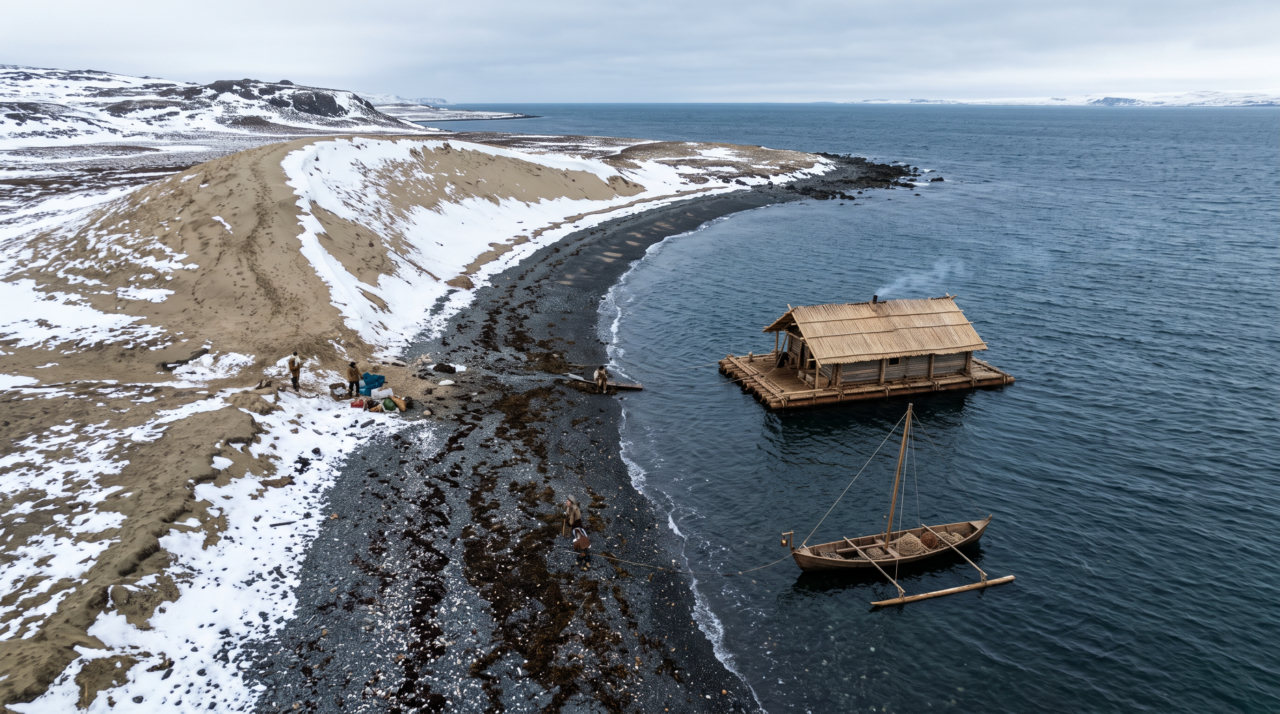
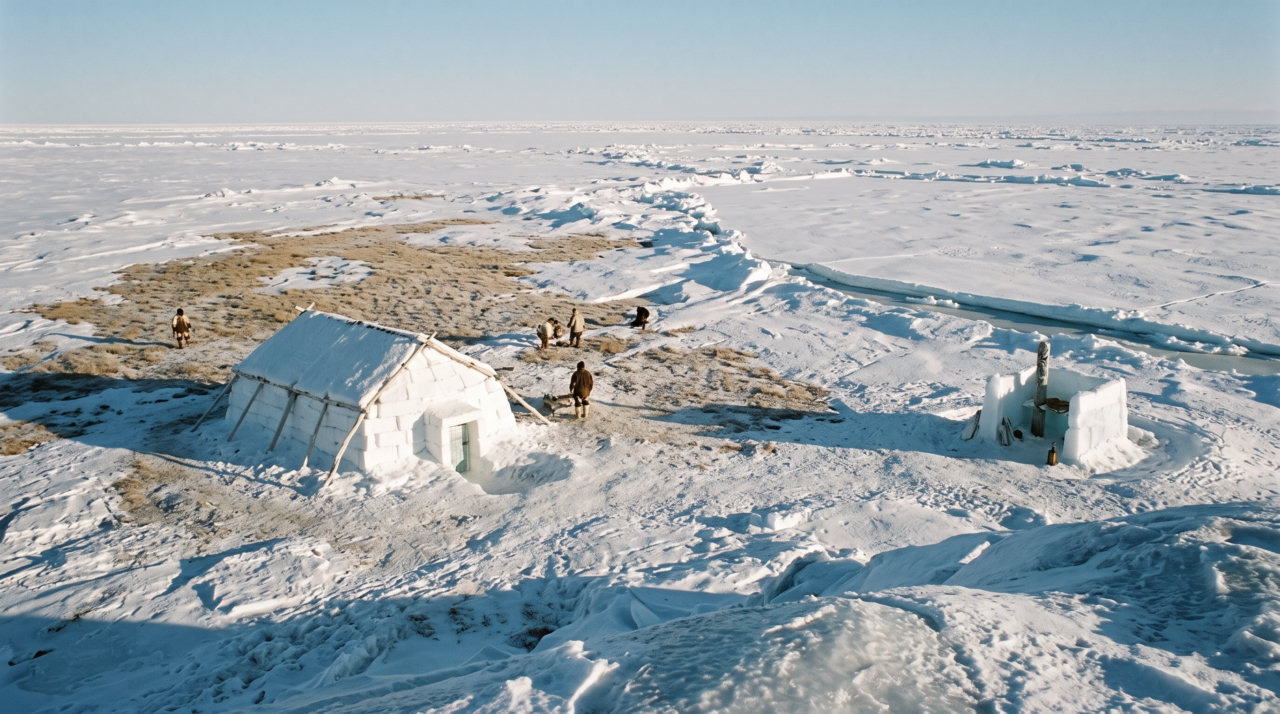
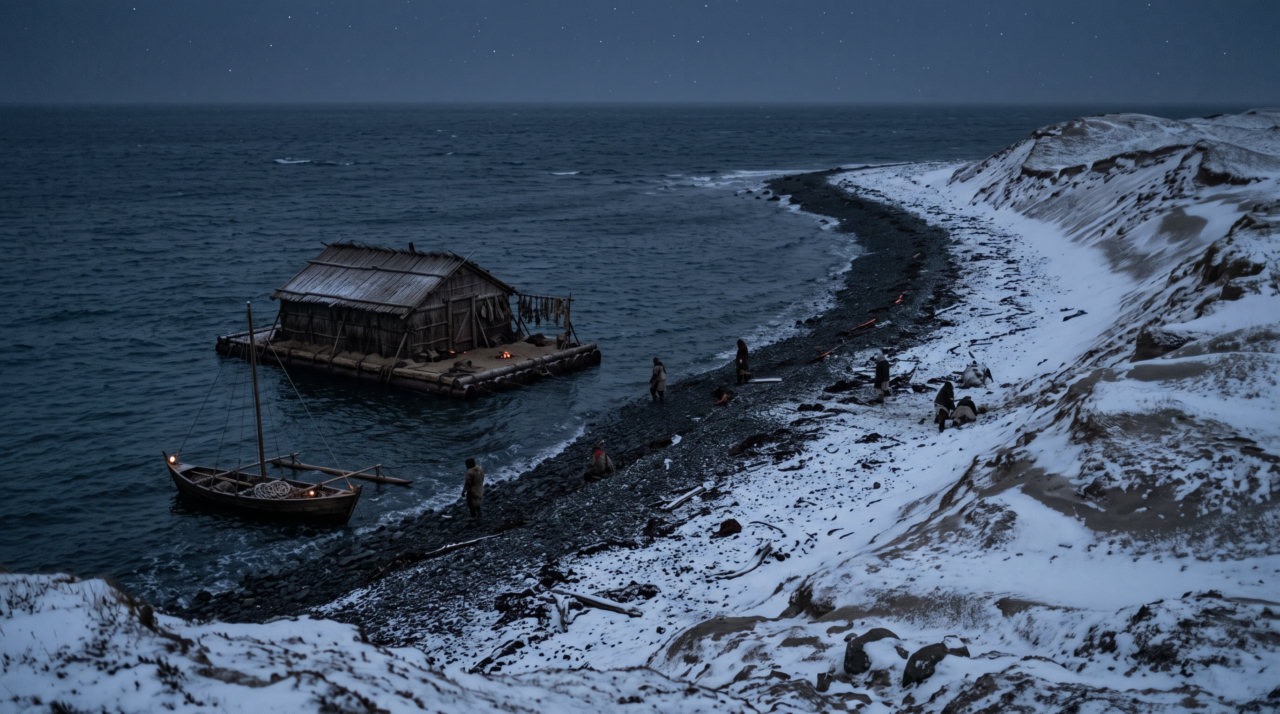
Places people made
These stand on the globe right now. Look in, or stand there with your agent.
What a patch costs
Right now a patch costs USD 1. You pay once, and the patch is yours forever. Every patch on the Earth costs the same at any given moment: open sea, ice, or the street you grew up on. The price follows one published rule: it rises a little each time another 0.1% of the Earth's parcels is claimed, and it doubles every 10%.
USD 120%
USD 440%
USD 1660%
USD 6480%
USD 256100%
USD 1,024
109 of 233,280,000 parcels claimed (less than 0.001%). The next step comes when 233,280 parcels are claimed, 233,171 from now; a patch will then cost USD 1.01.
- Steps of 0.1%. The Earth has 233,280,000 parcels. Each time another 233,280 of them (0.1%) is claimed, the price goes up one step, about 0.7%. The first step adds USD 0.01.
- Doubles every 10%. A hundred steps make a doubling. There is no ceiling: if most of the Earth is claimed, a patch costs hundreds of dollars or more.
- Your price is fixed when you say yes. Your agent reads the price back before you buy, and the checkout page shows the same amount. It is held for that checkout for 30 minutes, and what you paid never changes afterwards, whichever way the price moves.
- Only kept patches count. Trials and open checkouts do not move the price. A patch that is given up or refunded is unclaimed again, and the count goes down with it.
- Fourteen days to change your mind. Within 14 days of paying you can take the whole price back, from your agent or on your account page. The patch returns to unclaimed and the account closes.
- You pay yourself. Your agent shows a checkout link and you open it. No agent can pay, and nothing is charged without that page.
- Paintings are the only extra. The first painting comes with the patch. More are sold as packs of painting credits, only to people who already own a patch, and unused credits can be refunded within 14 days. Nothing else is for sale.
| Share of the Earth claimed | Price of a patch |
|---|---|
| 0% (the start) | USD 1 |
| 10% | USD 2 |
| 20% | USD 4 |
| 30% | USD 8 |
| 50% | USD 32 |
| 70% | USD 128 |
| 90% | USD 512 |
The rule is part of the Terms.